
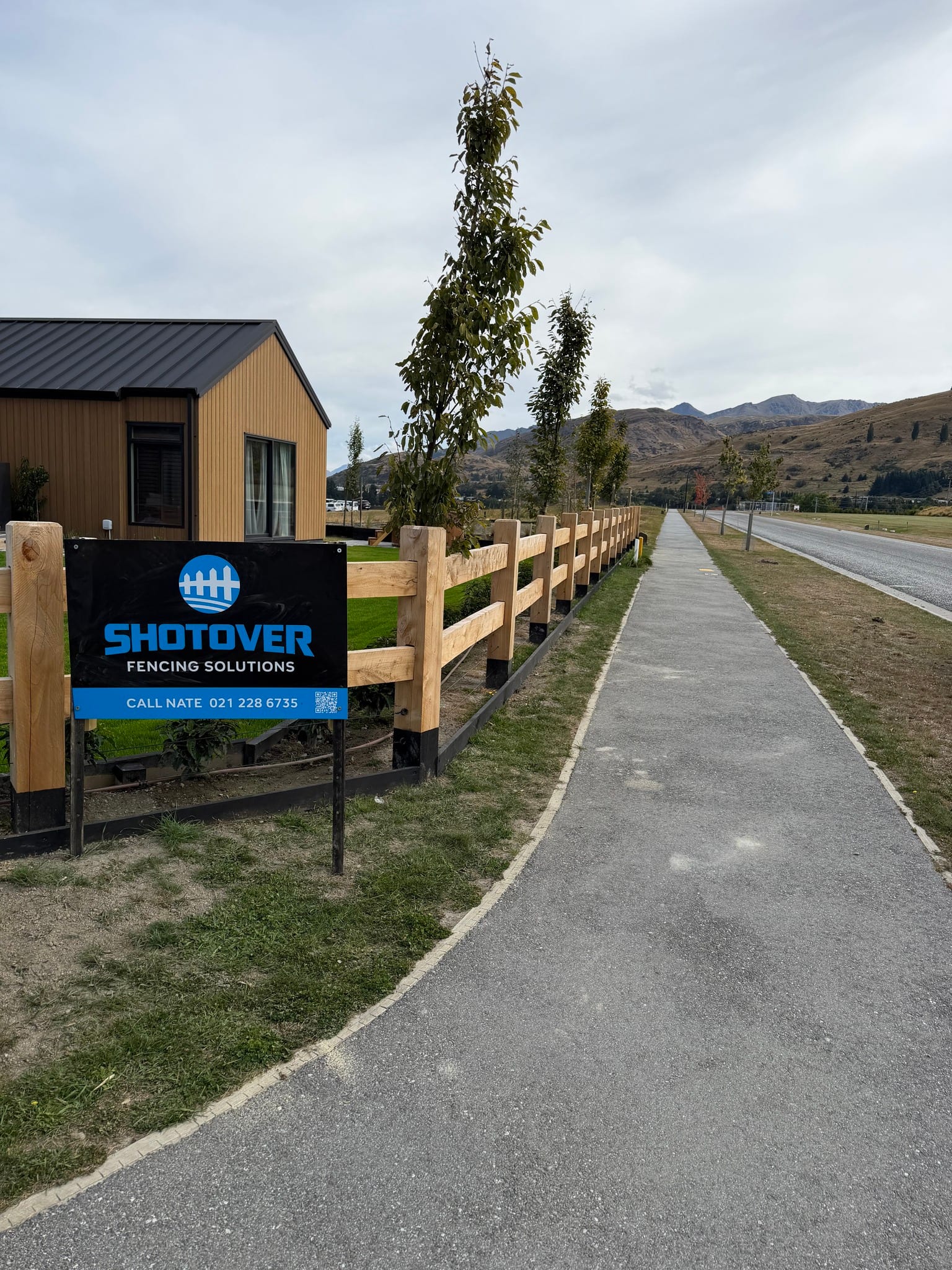
Parkridge is one of Queenstown's most active new residential subdivisions. If you have recently settled on a section there, or you are in the process of building, fencing is probably on your radar. Here is what we know from working in Parkridge regularly.
What Are Design Covenants?
Most modern subdivisions in New Zealand have design covenants in place. These are legal restrictions registered on the title that dictate how properties in the development must look and be maintained. They exist to protect the quality and aesthetic consistency of the subdivision, which in turn protects property values.
Fencing is almost always covered by subdivision design covenants. They typically specify things like:
- Which materials are permitted or recommended
- Maximum fence heights
- Setback distances from boundaries and roads
- Whether front boundary fencing is allowed at all
- Colour restrictions
Important: Design covenants are binding. If you install fencing that breaches your covenant, you can be required to remove or modify it at your own cost. This is not a theoretical risk. It does happen.
Common Fencing in Parkridge
Based on what we see regularly in Parkridge, the most common covenant-compliant fencing options are:
Macrocarpa Post and Rail
Post and rail fencing is one of the most frequently specified styles in Queenstown subdivisions, and Parkridge is no exception. Macrocarpa is preferred over treated pine for its natural appearance and durability. It fits the rural-residential character that most Queenstown subdivision design guides are trying to maintain.
We have installed a significant amount of macrocarpa post and rail in Parkridge and surrounding subdivisions. It is a straightforward, cost-effective option that typically satisfies covenant requirements without any issues.
Timber Paling
Standard timber paling fencing is permitted for side and rear boundaries in most subdivision covenants, including in Parkridge. The key considerations are usually height limits and whether the fence needs to be set back from the boundary.
What Is Usually Not Permitted
Front-of-property fencing is often restricted or prohibited entirely in new subdivisions. The intent is to maintain an open streetscape. Corrugated iron, chain-link, and certain metal or industrial-looking materials are commonly excluded by design guidelines.
Smart wall and louvre fencing may or may not be permitted depending on location and how the covenant is worded. It is worth checking before committing to this style.
Always Check Your Specific Covenant
Every section title is different. The covenant on your section is the document that matters, not general information about what other people in the subdivision have done. Your covenant will be registered on your certificate of title. Your solicitor will have a copy, or you can request it through Land Information New Zealand (LINZ).
When in doubt, check the covenant first. Then talk to us. We have seen enough Parkridge sections to know what typically works, and we can help you pick a style that is both compliant and looks great.
Getting In Early
If you are still in the build process, it is worth thinking about fencing early. Coordination with your builder can make the installation much smoother, particularly for combination fence and retaining jobs, which are common on sloped Parkridge sections. Getting us involved before the landscaping is finished is almost always easier than trying to work around it afterwards.
Call Nate on 021 228 6735 for a free site visit and quote. We cover all of Parkridge and the wider Queenstown area.
Building in Parkridge?
We work in Parkridge regularly. Free site visits and quotes available.