
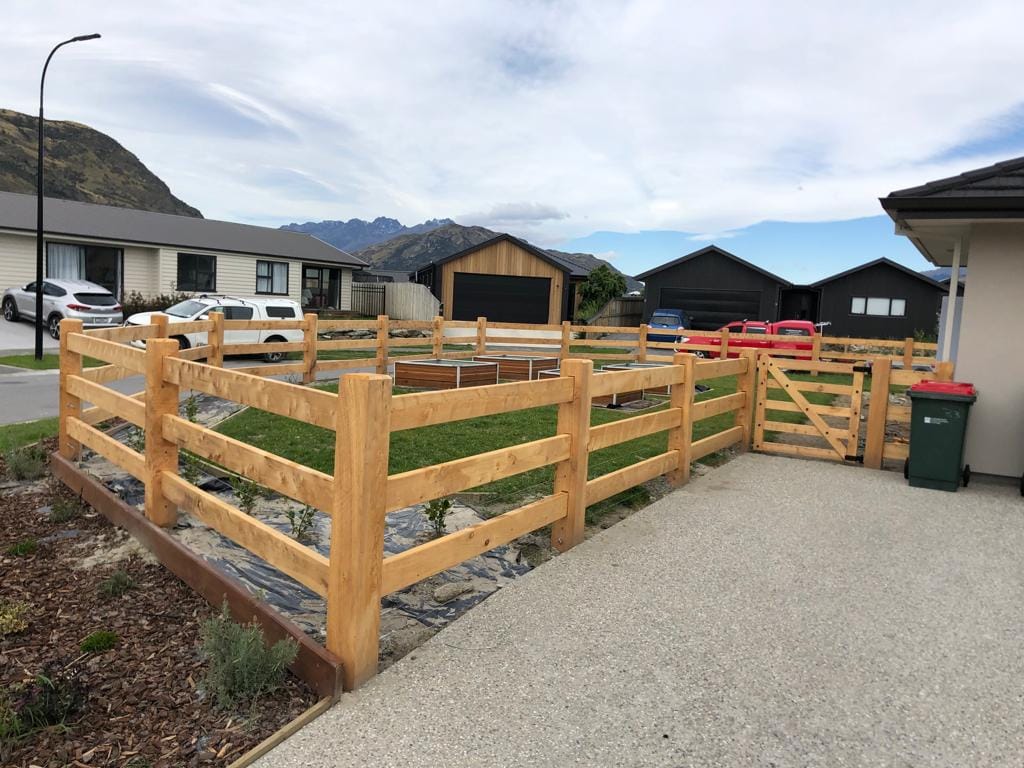
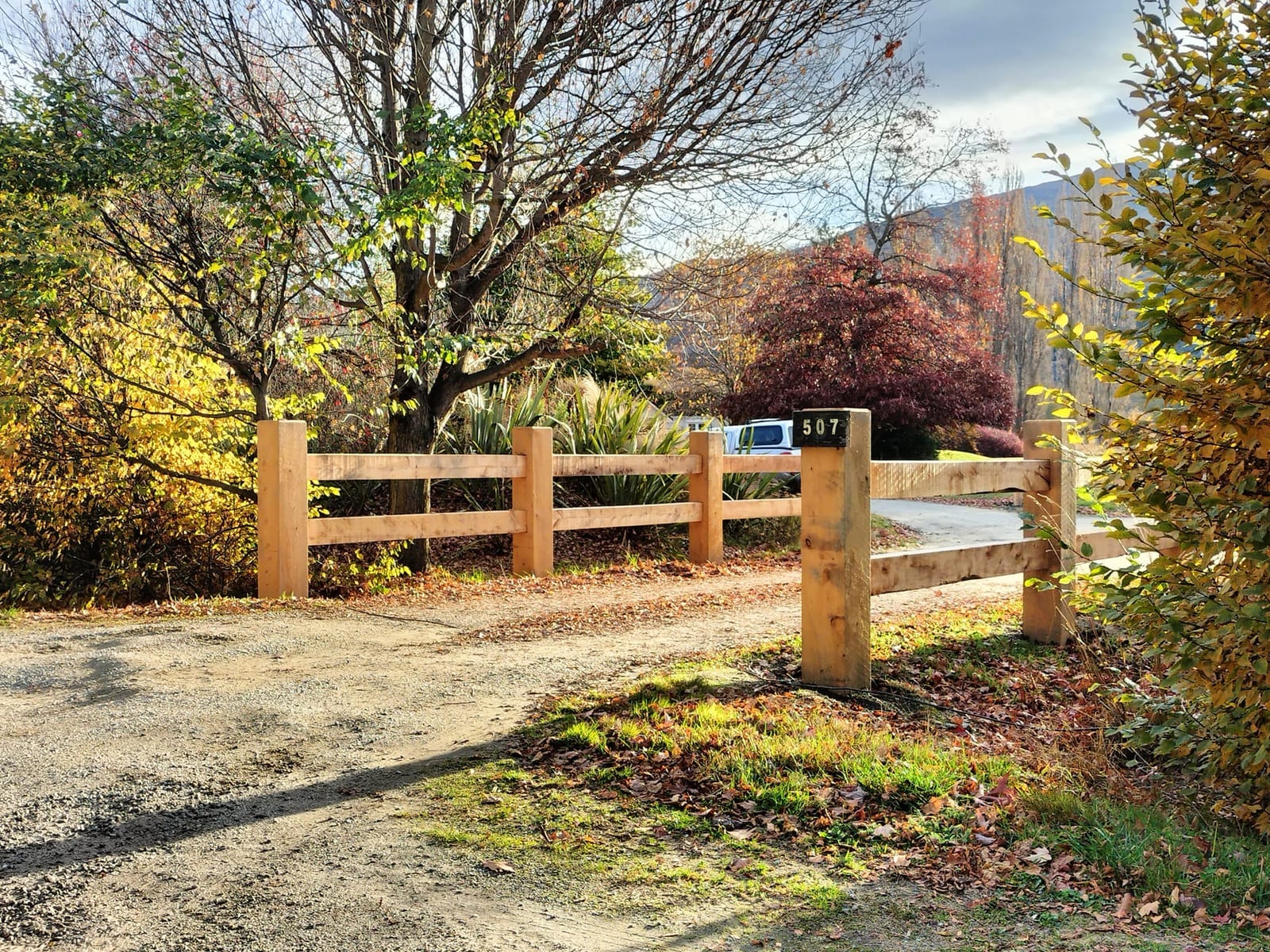
Drive through almost any Queenstown subdivision and you will spot it: the warm, honey-toned timber posts and rails running along boundary lines and driveways. That is macrocarpa, and there is a reason it keeps turning up. It suits the landscape, ages well in this climate, and most subdivision covenants actively encourage it.
What Is Macrocarpa?
Macrocarpa is the common name for Cupressus macrocarpa, a Monterey cypress that was introduced to New Zealand in the 1800s. It is not native, but it has been growing here long enough that it has become a firmly established part of the rural and semi-rural landscape, particularly in the South Island.
What makes macrocarpa useful as a fencing timber is its natural durability. The heartwood contains oils that make it resistant to rot and insect damage without any chemical treatment. It is classified as durable timber under NZS 3602, which means it can be used in ground contact without needing to be treated with preservatives. That matters in a place like Queenstown where frost, UV, and occasional heavy rain all take their toll on materials.
Why It Suits Queenstown
Queenstown sits at around 310 metres above sea level, and many of the surrounding subdivisions are higher again. The climate is semi-alpine: cold winters with hard frosts, hot dry summers, and strong UV. Pine timber treated with preservative can work in these conditions, but it tends to split and check more noticeably as it dries out. Macrocarpa is naturally stable and handles the freeze-thaw cycle better.
Aesthetically, macrocarpa fits the landscape in a way that steel or treated pine often does not. The grain is attractive, the colour mellows over time to a silver-grey, and it sits comfortably alongside the native tussock and schist stone that define the look of the region. That is not a small thing in a market where property presentation matters.
Subdivision Covenants and Macrocarpa
Many Queenstown subdivisions have design covenants that restrict the types of fencing you can use on boundary lines. These are put in place by the developer to protect the look and feel of the development, and they are legally binding even after the developer has sold all the sections.
Post and rail fencing in macrocarpa or similar natural timber is one of the most commonly permitted fence types in local covenants. You will often see it specified for front boundaries and rural-facing boundaries, where solid privacy fencing would look out of place. If you are buying in a new subdivision, always read the covenants before you commit to a fence style. We can help you interpret them if they are not clear.
How Macrocarpa Ages and Weathers
Fresh-cut macrocarpa is a warm golden-yellow. Over the first couple of seasons it darkens slightly, then gradually bleaches out to a soft silver-grey as the UV does its work. Most people find the aged look attractive. It blends into the landscape rather than standing out.
The timber will develop surface checks (small cracks along the grain) as it dries. This is completely normal and does not affect structural integrity. The posts will stay solid for many years. What you are not going to get is the uniform, paint-ready finish you would expect from dressed pine. Macrocarpa is a rustic material and it looks like it.
Maintenance
Macrocarpa post and rail fencing is genuinely low maintenance. There is no painting or staining required. The posts do not need retreating. The main jobs are:
- Checking that posts are still vertical after winter frosts (ground heave can shift them)
- Clearing any vegetation growing up around the base of posts, which can trap moisture
- Replacing any rails that have broken from stock pressure or impact damage
A well-installed macrocarpa fence in Queenstown conditions should be structurally sound for 20 to 30 years. Posts set in concrete will last even longer.
Cost Compared to Treated Pine
Macrocarpa costs more than treated pine. Expect to pay roughly 20 to 40 percent more per metre of fence run, depending on post spacing and the number of rails. The trade-off is that you do not need to treat it, it looks better as it ages, and it performs at least as well in alpine conditions.
For subdivision covenants that specify natural timber, macrocarpa is often the most practical choice anyway. Using treated pine where the covenant requires natural timber is a covenant breach, and that can cause problems when you come to sell.
If you are getting quotes for a post and rail fence and price is a concern, give Nate a call on 021 228 6735. We can work through the options and find something that fits your budget and meets your covenant requirements.
Need a macrocarpa quote?
Free, no-obligation quotes across Queenstown and Central Otago.